Quick Summary
The best way to stop losing car keys is to give them one fixed spot and repeat the same routine every day. Keep them clipped to a bright lanyard, check your pocket before you leave, and return them to the same hook each night. Trackers and spare keys can back up the habit.
- Keep keys in one fixed spot near the door you use most.
- Repeat the routine on purpose until it feels automatic, often the hardest part in the first week.
- Clip keys to a bright lanyard so they stand out in a bag or pocket.
- Keep only the car key on the main ring and move other keys to a separate ring.
- Test any tracker by leaving keys in another room and confirming the app shows the right location.
Table of Contents
- Why People Keep Losing Their Car Keys
- Build a Consistent Routine for Your Keys
- Where to Keep Car Keys at Home
- How to Keep Track of Car Keys Day to Day
- Choosing the Best Key Tracker for Car Keys
- Why a Spare Car Key Is Worth Having
- Start Your Key Habit This Week
- Frequently Asked Questions
Why People Keep Losing Their Car Keys
Last Updated: November 19, 2026
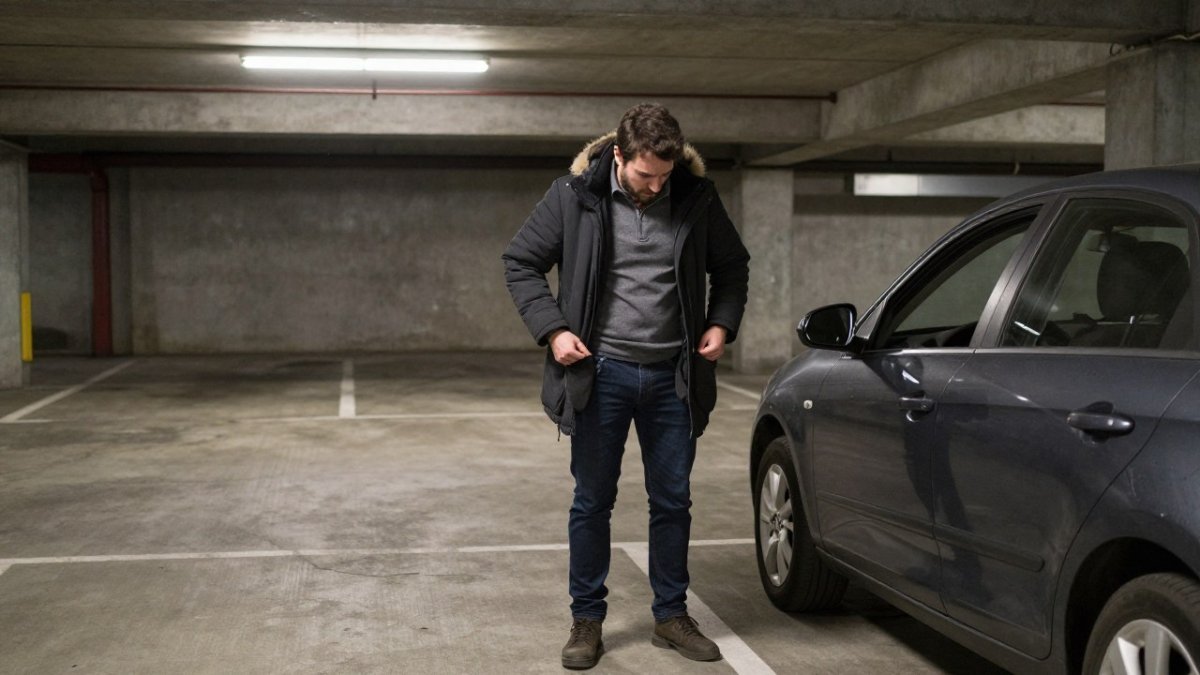
Losing car keys is one of the most common and stressful problems vehicle owners face. Losing car keys often happens in the same situations: a rushed morning, a full grocery bag, a key tossed onto a counter, and then a frantic search. Most people do not lose keys because they are careless. They lose them because their routine has no fixed place for the keys.
Modern keys make the problem harder. A transponder key, smart key or fob is small, flat and easy to pocket without noticing. Many people also carry several keys on one ring with a house key, a mailbox key and a bike lock. That crowded ring makes the car key easy to miss.
Here is what usually causes the loss:
- No fixed spot. Keys go wherever the hands were last free.
- Distraction. Phones, children and bags pull attention away at the exact moment keys are set down.
- Hidden keys. A dark coat pocket or deep bag swallows a small fob.
- Shared use. Two drivers in one house often leave keys in different places.
The fix is not complicated. It starts with building a simple habit that you repeat every day.
Build a Consistent Routine for Your Keys
A consistent routine works because it removes the decision. You stop asking where the keys are and simply know.
Try this four-step routine:
- Walk in and put the keys in the same spot every time.
- Before you leave, touch the keys and say the word “keys” out loud.
- Check your pocket or bag before you close the door.
- At night, return the keys to the same place as part of your shutdown routine.
Many people find the hardest part is the first week. Repeat the routine on purpose until it feels automatic. Once it does, the keys stop going missing.
Where to Keep Car Keys at Home
Choose one spot near the door you use most. A wall hook, a small tray or a bowl on a shelf all work well. The best spot is the one you will actually use, so pick something close to where you enter and leave.

Keep the spot clear of clutter. A key hook buried under mail and bags is no better than a random counter. Place a bright or distinctive item next to the keys so they stand out at a glance.
If your home has more than one driver, give each person a separate hook or tray. Shared spots lead to confusion, and confusion leads to a frantic search.
How to Keep Track of Car Keys Day to Day
Daily tracking is about making keys easy to see and hard to forget. Small changes add up quickly.
- Clip keys to the same bag strap or lanyard every day.
- Use a bright keychain so the ring stands out in a purse or pocket.
- Keep only the car key on the main ring and move other keys to a separate ring.
- Check before you exit a store or vehicle, especially after loading groceries.
Making Keys Easier to See and Attach
Visibility matters more than most people expect. A dull black fob at the bottom of a bag can stay hidden for days. A vivid keychain or a lanyard makes the keys easy to spot.
Attach keys to a lanyard that clips onto a purse, backpack or belt loop. Some people prefer a short cord that stays inside a jacket pocket. Either way, the goal is to keep the keys connected to something you always carry.
Choosing the Best Key Tracker for Car Keys
A tracker can help locate keys after they have gone missing. Trackers differ in how they work, so it helps to understand the mechanism before choosing one.
How the three tracker types actually work
Bluetooth trackers pair with your phone and report their location only when your phone is within Bluetooth range, typically about 10 to 30 metres indoors, less through walls. When you are out of range, the tracker relies on a crowdsourced network: other users’ phones that pass nearby anonymously relay the tracker’s location back to you. That means a Bluetooth tracker left in a parking garage may still show a location if enough people walk past, but the update can lag by minutes or hours. Battery life is usually six months to a year on a coin cell.
GPS trackers contain their own radio and SIM, so they report location independently of any phone. They work across a wide area, but they need a data plan, a larger battery or hardwiring, and a clear view of the sky. A GPS tracker hidden in a key fob is unusual because of size and power; most GPS units are too bulky for a key ring.
Crowdsourced-network tags are a subset of Bluetooth trackers that lean heavily on the network effect. They are excellent in dense urban areas and weak in rural or remote settings where few phones pass by.
What to compare before you buy
- Range and network dependence. A Bluetooth tracker is only as good as the phones around it. If you park in a sparse area, a GPS unit is more reliable but costs more to run.
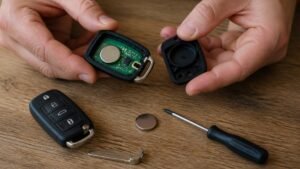
- Battery and replacement. Coin-cell Bluetooth tags are cheap to replace but die without warning. Set a calendar reminder a month before the rated life ends.
- Separation alerts. Many trackers can warn your phone when you walk away without the keys. This is the single most useful prevention feature, test that it actually fires before you trust it.
- Compatibility. Confirm the tracker works with your phone’s operating system and that the app supports the alert types you want.
- Size and attachment. A tracker that will not sit flat on the ring or fit in the fob pouch will get left at home.
Watch out: a tracker cannot find keys that are out of range with a dead battery, and a crowdsourced location is a last-known sighting, not a live position. Treat the tracker as a backup to the fixed-spot habit, not a replacement for it.
Set it up properly
Pair the tracker the day you buy it, label it in the app with the key it belongs to, enable separation alerts, and run a test: leave the keys in another room and confirm the app shows the right location. Repeat the test after any app or phone update. A tracker you have never tested is just extra weight on the ring.
The article compares the three main tracker types on how they locate keys and what to check before buying.
| Tracker type | How it locates keys | Main trade-off |
|---|---|---|
| Bluetooth | Reports when phone is in range, about 10 to 30 m | Range depends on nearby phones |
| GPS | Own radio and SIM, works across wide areas | Needs data plan and larger battery |
| Crowdsourced network | Anonymous phones relay last-known location | Strong in cities, weak in rural areas |
Why a Spare Car Key Is Worth Having
A spare key can protect you when the main key goes missing. Without one, a lost key can mean a missed appointment and an expensive replacement.
Keep the spare in a separate, secure place at home, not in the car. Some people give a spare to a trusted family member. Others keep it in a locked drawer. Either way, make sure it works before you need it.
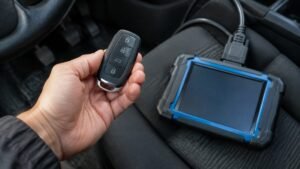
A spare also helps with theft prevention. If you lose your only key, you may need to replace the entire lock system, which costs far more than a second key. Ask a professional about programming a spare key for your model.
Start Your Key Habit This Week
Pick one habit and start today. Choose the spot for your keys, attach a bright keychain, and repeat the routine each time you come home. Add a tracker or spare key once the daily habit feels natural.
If you lose your keys or need a replacement, call Cle Auto Montreal at 514-992-6628. Our mobile technicians serve Montreal, Laval and the West Island, and we can help with key replacement, programming and lockouts.
Frequently Asked Questions
How can I stop losing my car keys?
The most effective approach is a repeatable routine: return your keys to the same spot every time you park or come inside, and avoid setting them down in random places like jacket pockets, countertops or car seats. Pair that habit with a bright or distinctive keychain so the set is easy to spot in a bag or on a surface. Most people who keep losing keys are not careless; they simply have no fixed place for them. Once the routine is automatic, the number of lost-key moments usually drops quickly.
Are Bluetooth key trackers useful for car keys?
Yes, a Bluetooth tracker can help you locate keys within a short range, usually from a few dozen metres in open space and much less indoors or through walls. Attach the tracker to the key ring or to the key fob itself, and check that the companion app can send location alerts to your phone. Keep in mind that trackers depend on battery life and a nearby phone, so they are a backup to good habits rather than a replacement for them. Replace the tracker battery on the schedule the manufacturer recommends.
Should I keep a spare car key?
A spare key is one of the most useful protections against a lost-key emergency. If your only key is gone, a replacement can cost far more and take far longer than a spare you already have. Store the spare somewhere safe at home, not inside the vehicle, and check that it still works every few months. If you are unsure whether your model needs a programmed transponder or smart key, a qualified automotive locksmith can confirm what is required.