Last Updated: October 26, 2026
Quick Summary
A car key fob stopped working usually stems from a dead battery, internal damage, a weak vehicle battery, or a faulty receiver. Test your spare fob first to determine whether the problem is in the fob itself or your vehicle, then replace the battery or seek professional help based on your findings.
- Most fobs use CR2032 or CR2025 coin-cell batteries, available for under 5 CAD at pharmacies and grocery stores.
- Test your spare fob on the same vehicle to quickly determine if the fault is in the fob or the vehicle’s receiver.
- Battery polarity matters; the positive side marked with a plus sign must face toward you when inserting.
- If the fob works only within a foot or two of the door, the battery is weak or the antenna is degraded.
- Water damage is common and requires professional assessment, as corrosion spreads quickly on circuit boards.
Table of Contents
- What You’ll Need Before You Start
- Diagnosing Why Your Car Key Fob Stopped Working
- Car Key Fob Battery Replacement
- Key Fob Not Working After Battery Replacement
- How to Start a Car With a Dead Key Fob
- Car Key Fob Reprogramming When Needed
- Common Mistakes to Avoid
- When to Seek Professional Help
- Frequently Asked Questions
What You’ll Need Before You Start
Gather a small flathead screwdriver, a fresh coin-cell battery (most fobs use CR2032 or CR2025), a soft cloth for cleaning contacts, and your owner’s manual in case you need to reprogram.
A working spare fob is invaluable. If you don’t have one, know your vehicle’s emergency start method. Note your car’s year, make, and model in case you need professional support.
Diagnosing Why Your Car Key Fob Stopped Working
A car key fob stopped working can stem from three sources: the fob, your vehicle’s receiver, or signal interference. Pinpointing the cause saves you from buying a battery or paying for programming when neither is the problem.
Is it the fob, the vehicle receiver, or signal interference?
Work through these checks in order. Stop as soon as one produces a clear answer.
- Press every button on the fob while standing next to the car. If some buttons work and others don’t, the fault is inside the fob, worn button contacts or a cracked circuit board. If nothing works, continue.
- Test at varying distances. Press unlock from about 3 meters, then walk closer while pressing repeatedly. If the fob only works when you’re within a foot or two of the door, the battery is weak or the antenna/receiver is degraded. If it never works at any distance, continue.
- Try a spare fob on the same vehicle. A spare that works perfectly proves the vehicle receiver and vehicle battery are fine and your main fob is the problem. A spare that also fails points to the vehicle side, receiver, antenna, or vehicle battery.
- Check the vehicle’s other electrical behavior. If the dome light is dim, the engine cranks slowly, or other remote functions (power liftgate, remote start) also fail, a weak vehicle battery or a blown fuse is more likely than a fob fault. Modern vehicles can disable keyless entry when system voltage drops.
- Move the car or the fob. Interference is uncommon but real near radio towers, airports, substations, and some aftermarket chargers. If the fob fails in one spot but works a block away, interference is the cause.
Quick diagnostic flowchart
| Test | Result | Likely Cause | Next Step |
|---|---|---|---|
| Press all buttons on fob | Some work, some don’t | Worn buttons or internal damage | Inspect/repair fob |
| Press all buttons on fob | Nothing works | Dead fob battery, receiver, or vehicle battery | Continue to distance test |
| Test fob at varying distances | Works only when very close | Weak fob battery or degraded antenna | Replace fob battery; recheck |
| Test fob at varying distances | Never works at any distance | Receiver, vehicle battery, or fuse | Test spare fob |
| Test spare fob on your car | Spare works perfectly | Main fob needs repair or replacement | Repair/replace main fob |
| Test spare fob on your car | Spare also fails | Vehicle receiver, antenna, or vehicle battery | Check vehicle battery and fuses; book diagnostic |
| Fob fails in one location only | Works elsewhere | Signal interference | Move away from source |
Distinguishing a fob battery issue from a car battery or receiver issue
A fob battery and a car battery fail in different ways:
- Fob battery: range shrinks gradually, buttons need multiple presses, and the problem appears suddenly after months of normal use. The spare fob still works.
- Vehicle battery: the fob may work intermittently, but you’ll also notice slow cranking, dim interior lights, or other electrical quirks. Both fobs may behave the same way.
- Receiver or antenna: the fob transmits (an LED may blink, or a test tool at a shop can confirm signal), but the car never responds, even with a fresh battery and a known-good spare. This usually needs a dealer or locksmith with a scan tool.
A common pattern: owners replace the fob battery, the fob still fails, and only then discover the vehicle battery was marginal. Checking the vehicle’s other electrical systems first avoids that wasted step.
Before buying any parts, test the spare fob. It is the single fastest way to split fob-side faults from vehicle-side faults, and it costs nothing.
Transport Canada vehicle safety standards outline requirements for keyless entry systems, though interference issues fall outside regulatory scope and are typically environmental.
Car Key Fob Battery Replacement
Finding the correct battery type

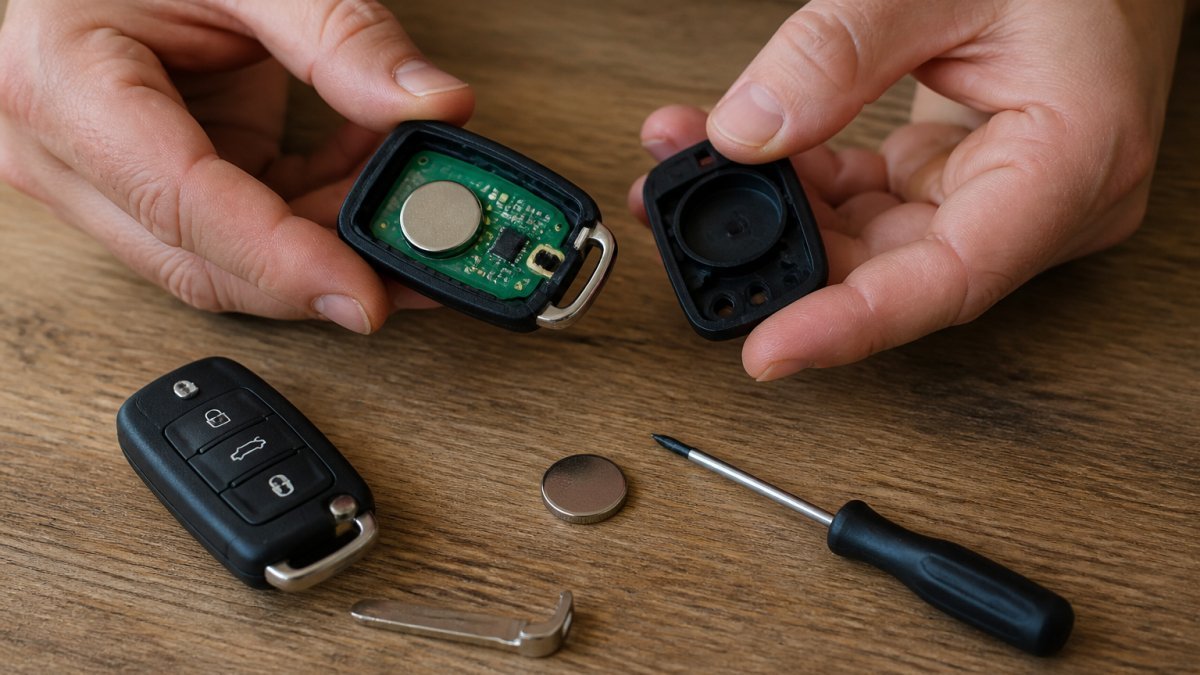
Open your fob with a flathead screwdriver and check the battery. Most fobs use CR2032 or CR2025 coin-cells; some luxury vehicles differ.
Buy fresh batteries from any pharmacy, grocery store, or electronics retailer, usually under 5 CAD. Avoid the cheapest options; a reliable battery lasts years.
Step-by-step replacement process
-
Open the fob carefully. Insert your flathead screwdriver into the seam and gently twist. Don’t force it, the casing can crack.
-
Note the battery orientation. The positive side (marked with a plus sign) should face toward you.
-
Remove the old battery. Pry it out with your screwdriver tip. Don’t touch the terminals with bare fingers, oils reduce contact.
-
Insert the new battery. Match the orientation exactly, positive side up, and press until flat.
-
Close the fob. Align the halves and press until you hear a click.
-
Test immediately. Stand near your car and press each button.
Checking battery orientation and cleaning contacts
Battery polarity matters. If your fob still doesn’t work after replacement, open it and flip the battery 180 degrees.
While the fob is open, inspect the metal contacts where the battery sits.
Key Fob Not Working After Battery Replacement
Testing the fob immediately after battery change
Replace the battery, close the fob, and test right away from within 10 feet. If nothing happens, reopen the fob and verify polarity, flipping the battery if needed. If it still fails, try a different brand-new battery; some sit in storage longer and lose charge.
Damaged buttons or internal water damage
If the battery was correct and the fob still won’t work, internal damage may be the cause. Water damage is common; rain, spills, or humidity can corrode circuits.
A fob that partially works, some buttons function, others don’t, usually indicates worn button contacts or internal circuit damage. These issues cannot be fixed with DIY methods. Professional technicians can assess internal damage and determine whether repair or replacement makes sense.
How to Start a Car With a Dead Key Fob
Using your backup key or spare fob
If you have a spare fob, use it immediately. Learn why having a spare key set protects your vehicle access and prevents being stranded.
If you have a physical backup key, use it to unlock the door manually.
Emergency start methods vary by model, find yours before you need it
There is no single override that works on every vehicle.
Common patterns you’ll find in owner’s manuals include:
- Hold the fob against the start button. Many push-button vehicles have a receiver behind the start button; pressing the fob body against the button while pressing the brake can allow a start with a dead fob battery. The exact position and duration vary.
- Place the fob in a marked pocket or slot. Some vehicles have a dedicated cupholder slot, a pocket in the center console, or a marked area on the dashboard that boosts the signal for a dead fob.
- Use the physical key in the ignition. Vehicles with a traditional turn-key ignition will start with the physical blade even if the fob electronics are dead.
Do not assume a method that worked on a previous car will work on your current one. Holding a fob against the start button is common but not universal, and some vehicles require the fob in a specific slot instead.
If none of these work
If you’ve tried the owner’s-manual procedure and the vehicle still won’t start, you’re likely dealing with a vehicle-side fault, a weak vehicle battery, a failed receiver, or a blown fuse, rather than a dead fob. In that case, professional help is the next step. Canadian Automobile Association roadside assistance offers emergency lockout and jump-start services, or contact a mobile locksmith such as Cle Auto Montreal for rapid assistance in your area.
Car Key Fob Reprogramming When Needed
When reprogramming is actually necessary
Reprogramming is not always the answer. Most fob problems stem from dead batteries or internal damage, not lost programming.
DIY reprogramming steps for some vehicles
Some vehicles allow owner reprogramming. The process varies widely by manufacturer. General steps for many vehicles:
-
Sit in the driver’s seat with all doors closed.
-
Insert your key into the ignition.
-
Turn to “On” without starting the engine, then back to “Off.”
-
Repeat this cycle 3-4 times quickly. Lights or a chime signal programming mode.
-
Press any button on your fob. The vehicle should flash or chime again.
-
Repeat for each fob you want to program.
This method works for many vehicles but not all. Luxury brands, newer models, and vehicles with advanced security systems often require dealer programming or professional locksmith tools.
If DIY reprogramming doesn’t work, don’t keep trying. Repeated failed attempts can lock out the system temporarily.
Common Mistakes to Avoid
Don’t force the fob casing open; cracked plastic lets water in and causes corrosion.
Avoid touching battery terminals with bare hands; skin oils reduce electrical contact.
Never assume the fob is broken before checking the battery.
Don’t mix old and new batteries.
Resist the urge to reprogram immediately. Test the battery replacement thoroughly first.
Don’t store fobs in extreme temperatures or direct sunlight.
When to Seek Professional Help
If you’ve replaced the battery, verified polarity, cleaned contacts, and tested thoroughly without success, professional repair is your next step.
If you need reprogramming and DIY methods failed, a professional locksmith has the tools and expertise to complete it correctly. Cle Auto Montreal offers key fob programming services and can handle complex reprogramming for most vehicle makes and models.
Vehicle security best practices from Insurance Bureau of Canada recommend keeping spare keys in secure locations and maintaining backup entry methods, sound advice that prevents lockout situations entirely.
A car key fob stopped working creates real stress. The good news: most problems are simple, and a battery replacement fixes the majority of cases.
Frequently Asked Questions
How can I tell if my car key fob battery is dead?
A dead key fob battery typically shows these signs: buttons require harder pressing than usual, the fob works only from very close range instead of the normal operating distance, or the unlock and lock functions stop responding entirely. Some fobs emit a dim LED when the battery is critically low. If the fob worked normally yesterday and suddenly stopped, a dead or dying battery is the most common cause. Test by replacing the battery first before considering other issues.
What should I do if my car key fob stopped working after I replaced the battery?
First, verify you installed the correct battery type and that it’s oriented correctly, with the positive side facing up. Remove the battery, clean both the battery contacts and the fob’s metal terminals with a dry cloth to remove dirt or corrosion, then reinstall. If the fob still doesn’t work, check for water damage or debris inside the casing. If the buttons feel stuck or damaged, the circuit board may be faulty. In these cases, professional repair or replacement is usually the only solution.
Can I start my car if the key fob isn’t working?
Yes. Most vehicles have a physical backup key hidden inside the fob that opens the driver’s door manually. Once inside, you can start the car using the ignition switch if you have a traditional key, or use the push-button start if your vehicle has one and you have the fob present (even if it’s not working). Some modern vehicles with keyless entry require the fob to be in range to start; in that case, you’ll need a spare fob or professional assistance to unlock and start the vehicle.
Do I need to reprogram my car key fob after replacing the battery?
No, you do not need to reprogram after a simple battery replacement. Reprogramming is only necessary if you’ve purchased a new fob, replaced the vehicle’s receiver, or if the fob was previously erased from the system. A battery replacement alone does not erase the fob’s pairing. If the fob still doesn’t work after battery replacement and you’ve ruled out physical damage or water intrusion, then reprogramming may be needed, but contact a professional to diagnose first.